Harvard Business Review launched a quick piece today on Lifestyle Brands Are Building Hotels Now. Here’s Why That Actually Makes Sense.
From the targeted customer experience perspective, one’s got to build something that they can really response with their brand. In the case below, people expect Godiva to offer classy but not too extremely pricey chocolate experience and moreover, that in-store customization effort is what they are known for. Hit up a local Godiva store and customize your own chocolate (Godiva physical are rare by the way, not even available in Austin / but they have physical stores in major consumer demand market i.e. Seattle, SF and Houston). This will likely be a transferable value-add for their own boutique hotels.
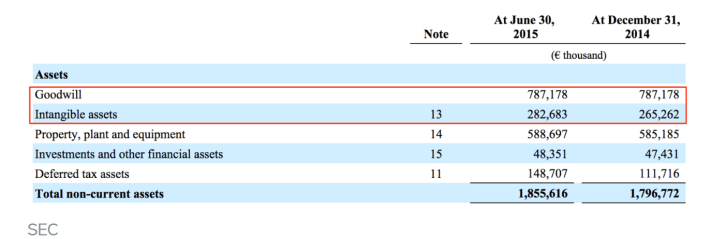
Hey after all, businesses got to put their “brand equity” (often recognized as “goodwill” on their balance sheet) to good use. Below is Ferrari’s balance sheet when they when public on NYSE. A substantial portion of their asset is sitting in goodwill i.e. brand equity which is hard to value with #’s. P.S. you can also look at publicly traded companies who “financial engineered” their balance sheet and who will perform relatively sub-par against the norm in by looking at the amount of goodwill companies add to their actual balance in the past few years.
Also, this is nothing too new in the real estate world – the idea of “cross pollination” of brand equity across several product experience. I think there is the “Porsche Tower” and “Aston Martin Residences” in Miami since a long time ago, which I am sure having one of these is one of the many variables they look at as to whether they will admit you into their residence.
Some Brands Juggling the Idea of Building their own Boutique Hotels
If you want to build a lifestyle brand, no matter the industry you’re in, consider building a hotel. After all, what more visceral, intimate way is there for you to articulate and communicate the lifestyle attributes of your brand than to invite customers to live in a space that reflects those attributes?
- One of the buzzy topics was the move by West Elm, the style-minded home furnishings company, to open a collection of boutique hotels in U.S. cities such as Indianapolis; Minneapolis; Savannah, Georgia; and Portland, Maine. The hotels (outfitted, naturally, with the company’s products) are “focused on achieving consistency of the West Elm aesthetic,” a company executive explained to an industry magazine. “We want the experience of walking into a West Elm hotel to evoke a similar feeling of walking into a West Elm store — but have the opportunity to extend this.” P.S. we use a decent portion of their classic furniture pieces.
- On the other hand, Godiva has been juggling the idea of opening up their own boutique hotels to extend their customer experience beyond “just chocolate. Godiva “would like people to stop in one of its shops for coffee in the morning and a snack in the afternoon.”
- I remember reading about how HYPERBEAST, the cool, hip semi underground shoe cultural brand, is opening up a boutique hotel of their own in Tokyo and Hong Kong, one of small handful cities anointed with hip cool fashion design. Hong Kong really kickstarted this trend way back in the 1980’s and then it got proliferated with the popularity of hip-hop and Nike’s Jordan’s basketball shoes in the early 1990’s.
- One of the most anticipated offerings, scheduled to open later this fall, is the Shinola Hotel, owned by the Detroit-based maker of watches, bicycles, backpacks, and other consumer items. Shinola has retail stores across the country for its products. But this hotel, which will anchor a complex of residences, restaurants, and shops, is meant to showcase the Shinola brand and the Detroit spirit on which it is based. “In the shift from a retail/consumer products brand to a lifestyle and 360-degree design brand,”
In short, if you are building a consumer facing product and/or service, ones to be prepare to extend brand equity across other product verticals to (1) build depth in the product experience extending beyond your “bread and butter” or at least plans to do that because Jeff Bezos said, “on average whatever business you are in, it will take just 1.5 – 2 years on average, for competitors to copy what you have and vice versa, so you have to find other ways to protect your moat, whether it be internal team dynamics, product features, extending your product’s ecosystem etc. Bezo said this just last week when he was giving an interview with David Rubenstein (founder of The Carlyle Group) at The Economic Club of Washington D.C.

 Intersection notepad