Most of us have heard that Apple’s products, or for that matter, most technology products, last on average ~ 2 years. Manufacturers of these hardware can put the pieces through strenuous test cycles, one that closely mimics the average amount of times we will press on that phone button etc. over the lifespan of 2-year period. This is in great to guarantee a fresh round of revenue injection with the introduction of new products every 2-year cadence, or whatever the cadence is deemed to be, which can and/or cannot be a function of pure product price / price sensitivity, competitor’s product life cycle, incremental value-add etc.
But as the mobile adoption across the world reaches some form of saturation, mobile adoption is there of, defined as individuals with ownership of at least one mobile device, companies are shifting the strategies of the games here. Two general observation of what’s happening in 2018, which is ~ 10 years post the launch of the first iPhone:
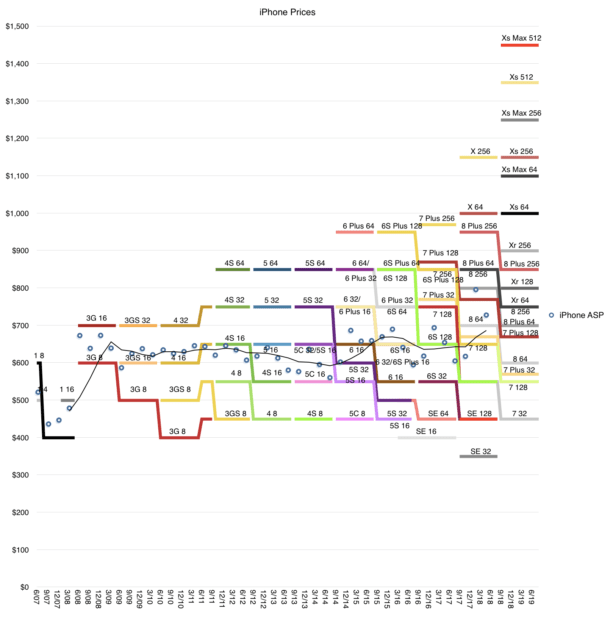
- Mobile companies are incrementally charging more on a pure $ basis for something that probably incrementally cost relatively less on the hardware component of it (ignoring the hard-to-value soft value-add i.e. access to a wider pool of value-add products via the mobile store / other software)
- Product life cycle is starting to get extended on the newer products AS well as the older products. The latest iPhone that was announced in Sept 2018 is noted to last substantially longer, in some parts, due to the consumer and countries (manufacturing countries) shift in sentiments and trust towards companies with a more environmentally-friendly attitude.
- Longer life cycle for existing products: The latest iOS update is noted to be compatible with devices down the the iPhone 5…which was launched several life cycles / years ago…which essentially widens the consumer pool, both from the pure $ affordability perspective as well as customers (like myself) who is keen on updating to the latest product every year…and their usage of their perhaps even higher-margin product verticals: app stores etc.
It would be worth putting some thoughts into your own startups / products product lifecycle and it’s implications of revenue mix, margin, ways to extend the consumer and revenue pool vertically and horizontally.

 Intersection notepad